AI 101 — What is MCP?

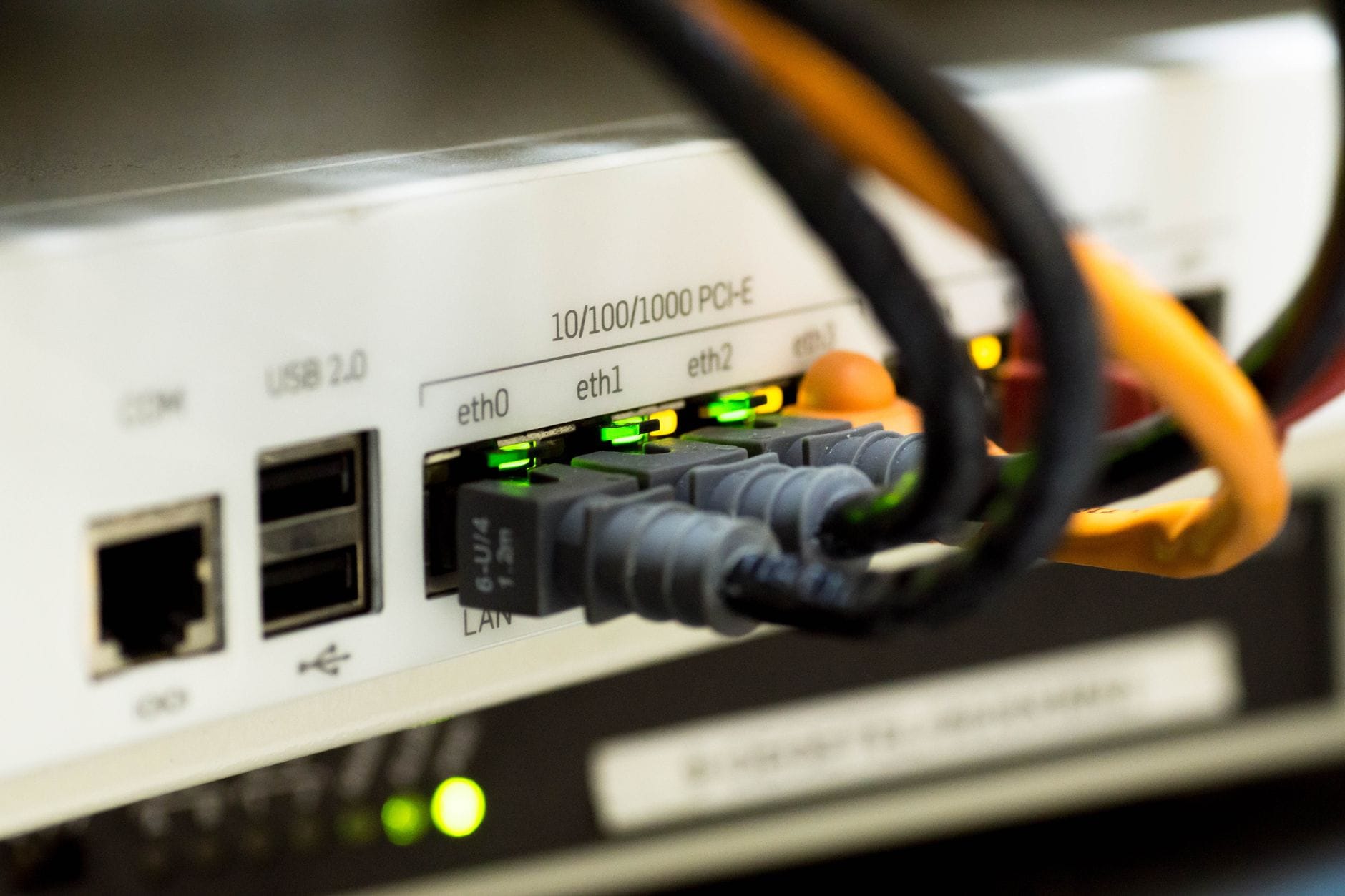
MCP — the Model Context Protocol — is an open standard that lets AI assistants plug into external tools and data sources the way a USB-C cable plugs into any device. It gives a chatbot or agent a universal socket for databases, calendars, code repos, calculators, and thousands of other systems, instead of a bespoke adapter for each one. If you've read about agents that "check your calendar," "look up the docs," or "run code," MCP is the plumbing underneath.
Why it's in the news
MCP is rarely the headline — it's the wiring. But it's why this week's agent stories work at all. Huawei's WorkSwarm puts a team of swarm agents on the HarmonyOS PC, Honor's YOYO Claw assistant runs on Zhipu's GLM-5.3, and chatbots are quietly doing some of Congress's work — every one of those systems needs a way to reach tools and data that live outside the model. Before MCP, each integration was a custom connector: your assistant talked to Slack one way, to your database another, and the developer wrote and maintained a different bridge for every pair. Anthropic's original pitch was that this "N×M" integration problem was strangling real-world AI — the company's words. MCP, open-sourced on November 25, 2024, replaced the pile of bespoke adapters with one protocol, and the industry moved fast: OpenAI and Google DeepMind adopted it within months, and in December 2025 Anthropic donated the standard to the Agentic AI Foundation under the Linux Foundation, with OpenAI and Block as co-founders. From Claude Desktop to ChatGPT to GitHub Copilot, "MCP support" is now a selling point on every tool's feature list.
The mental model
MCP defines three roles. The host is the AI application itself — Claude Desktop, a coding assistant, an agent framework. The server is the thing that owns a capability: a server for your calendar, one for your files, one for a database. The client is the adapter inside the host that speaks to a given server. When you ask the assistant something, it lists what each connected server can do, picks the tool that fits the request, calls it, and folds the result back into the conversation — all within the model's context window, the working memory that holds everything it sees before answering. The protocol messages travel over JSON-RPC, a simple request-response format, and a server can run on your machine or on a remote service. Build a server once, and any MCP-capable host can use it.
An everyday analogy
You travel abroad and every hotel room has a different wall socket. Carry five adapters, or push for one standard socket everywhere. A decade ago, that fight was real for phones: every device needed its own charger cable, until USB-C became the one plug. MCP is that consolidation moment for AI. A company like a hospital runs dozens of systems — records, scheduling, billing — and wants assistants that can use them. Without MCP, that's one custom bridge per pair of systems, forever. With MCP, they expose each system as a server once, and any assistant that supports the protocol plugs in. One socket, many devices.
Common misconceptions
"MCP is an Anthropic product." Anthropic created it and open-sourced it in 2024, but it was never a Claude-only feature. OpenAI and Google DeepMind came on board in 2025, and Anthropic donated the protocol to the Linux Foundation's Agentic AI Foundation that December — the same governance path that keeps standards like Kubernetes neutral. It is genuinely open, not a vendor lock-in play.
"MCP makes the model smarter." It doesn't change the model at all — no new training, no new weights. It changes what the model can reach. The reasoning still comes from the model; MCP just hands it tools and their results. A model with a great calculator server can do arithmetic reliably, but the arithmetic skill is the calculator's, borrowed through the connection.
"MCP is the same as RAG." They're often confused because both are about giving models outside data, but they solve different problems. RAG retrieves the most relevant documents from a store and stuffs them into the prompt. MCP is a general-purpose protocol for connecting to any tool or source — retrieval could be one MCP server among hundreds. They complement each other: an MCP server can expose a search index that a RAG pipeline then uses.
"MCP is a security risk by itself." The protocol is neutral, but it does widen the attack surface — every connected tool is another door, and a malicious tool result can steer the model just like a malicious web page can. That's why a tool's output should be treated as untrusted input, the same class of danger as prompt injection. The security conversation around MCP is really about permissions and sandboxing: who gets to call which server, and what the server is allowed to do.
Where to learn more
The official docs at modelcontextprotocol.io open with a plain-language explainer and the USB-C analogy — genuinely readable, not spec-only. Anthropic's original announcement is a short, clear statement of the problem MCP was built to solve. And the protocol's GitHub organization holds the specification, SDKs, and a growing list of reference servers, if you want to see what "exposing your data as an MCP server" actually looks like in code.
Related reading: MCP is one of the two big ways models get outside knowledge — the other is retrieval. What is RAG? explains how that pipeline works, and What are open-weight models? covers the local-model ecosystem where MCP servers often live.
Every time an assistant checks your calendar or reads a file, a protocol did the plugging-in. Which tool would you trust an AI agent to reach first — and which would you never? Write to us via our contact page.
Sources: MCP GitHub organization