The Take — Unitree's rout isn't a bubble. It's the brain lagging the body


Unitree did not lose half its value because investors suddenly hated robots. They stopped paying for a general-purpose humanoid whose intelligence, by the builders' own admission, is still stuck in its "GPT-2 era." The rout is the market finally pricing the one thing the last funding cycle chose to ignore: the gap between a robot body that can walk and a robot brain that can work.
I think we should stop calling this a bubble popping and call it what it is — a repricing from promise to proof. And the sharper, more useful conclusion isn't that physical AI is a fad. It's that the general-purpose humanoid bet got ahead of the science underneath it, while the narrowly-scoped robots generating real revenue were quietly the actual winners all along.
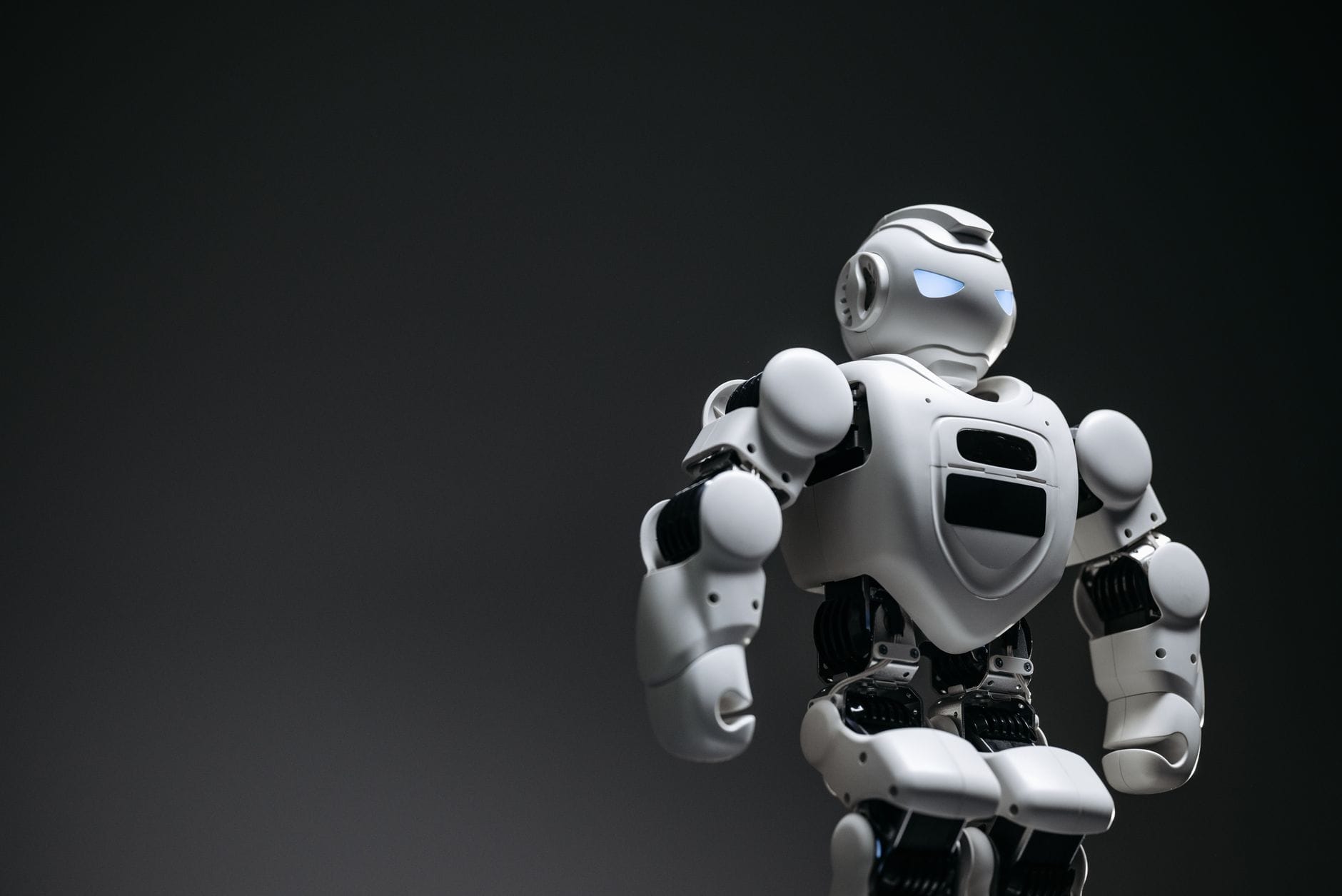
The numbers tell a story of euphoria meeting friction in barely a week. When Unitree became the first humanoid-robot maker to list on mainland China's stock exchange in mid-August, shares opened more than 600 percent above the IPO price and closed their first day up more than 460 percent — a debut that briefly valued the company in the tens of billions. As our deep dive on Unitree's debut noted, a listing that was oversubscribed thousands of times turned one company's first trading day into a verdict on an entire industry. Then the verdict flipped: trade press reported the stock halved in a week, one tracker pegged the slide near 45 percent, and the market latched onto a figure that only about 9 percent of robot sales actually reach paying end customers, as our morning brief reported.
The most damning part is that the people building the robot brains agree with the sellers. At last week's Actuate conference, which tripled to 1,500 attendees since 2023, researchers described the field as sitting in its "GPT-2 era" — the pre-ChatGPT moment when more data and more compute were the only obvious way forward. Wayve's Alex Kendall compared manipulation robotics to "self-driving five years ago." Genesis AI's Théophile Gervet put the whole general-purpose conceit on the table: "no customer cares about the general purpose robot that works at 80% success rate."
That last line is the crux. Everything the market was bidding up presumes a general-purpose humanoid that a customer can hand a series of unrelated jobs and trust. The deployments that actually earn revenue today are narrow and specific — Gritt building solar farms, Agility working industrial settings, Bedrock running excavators. Those are real businesses with real data. The general-purpose machines that sucked up the funding are still largely demos. We flagged the movement earlier this month in our brief on Unitree's IPO being oversubscribed so many times it read as a retail frenzy — the frenzy was on the bodies, never on the brains.
Now the fair counter-case, because it deserves to be stated at its strongest. Early in any S-curve, markets routinely punish the eventual winner. Amazon traded at a fraction of what it would become in 2000; no one should have written off computing after the dot-com crash. Robotics is explicitly pre-ChatGPT — the founder himself gave humanoids a two- to ten-year path to that moment in a post we covered. Losing half your value in a week on a rough figure like "9 percent to end customers" is the market pricing in the hype, not the fundamentals of a field that could still be enormous. Backing out now, the argument runs, means missing the ChatGPT moment you can see coming.
I'm sympathetic, and I'm not writing off physical AI. But this is where the comparison to Amazon and the dot-com bust actually cuts the other way. The firms that survived those corrections were the ones with demonstrated revenue and unit economics, not the ones whose whole thesis rested on a future capability. Unitree's slide isn't a signal that humanoid robotics is worthless — it's a signal that its valuation was set at a premium that presumed a capability even its own builders admit hasn't arrived. Nine percent of sales reaching end customers is not a data point you spin away; it is the market saying the bodies got funded ahead of the intelligence that would make them valuable.
The reason the take still holds is that the correction is measuring the right thing at the right time. VC can wait a decade on a thesis; the public market wants quarterly proof, and for general-purpose humanoids there is essentially none. That pressure is not a bug in the marketplace — it is the accountability layer the embodied-AI bubble was missing. Capital knows how to discount a science problem; it has never reliably priced "we'll figure out the intelligence later." When it stops pricing that, you get exactly this kind of repricing. And rather than being a disaster, it re-sorts capital toward the vertical specialists — Gritts, Agilities, Bedrocks — whose narrow deployments are compounding real-world data the field will need to climb out of the GPT-2 era. The path to a useful general robot, in other words, runs through the boring revenue-generating ones.
What would change my mind is concrete and observable. I'd revise the thesis if a general-purpose humanoid starts booking recurring, revenue-generating work at meaningful scale — not a demo, not a pilot with a reservation fee, but a customer paying repeatedly for unconstrained, general labor. Or if Unitree's share price stabilizes and converts the rout into a funded path toward that, rather than a scramble to justify the valuation. And I'd fully abandon the "brain lagging the body" framing if the field visibly crosses out of GPT-2 — that moment, once it arrives, is precisely when the premium market value becomes defensible. Until then, the rout was the market being honest.
Is a 45 percent haircut on a pre-revenue humanoid bet a healthy correction, or the market walking away from physical AI too soon? Tell us in the comments.