
The Take — Breaking Mila's windows is a gift to the labs

I think the people who smashed roughly 20 windows at Mila this week did more damage to the case against AI than to the institute — and that the labs they were angry at are the ones who benefit from the mess.
Start with what actually happened, because the details decide the politics. Late Tuesday night, about 10 people broke windows and spray-painted graffiti at the Montreal offices of Mila, the institute Yoshua Bengio founded, hours before the city opened ALL IN, billed as Canada's largest AI and technology conference. CBC reported a second building, a software company, was tagged the same night. Police arrested a 25-year-old woman near the scene. Then on Wednesday, an anti-AI march organized by the group Résistance Montréal along Jeanne-Mance Street, a block from the Palais des Congrès where the conference was running, turned violent, and police arrested a 19-year-old man.
Bengio addressed it from the stage: "Violence is not an answer to these risks and fears, which I can understand." Mila condemned "any use of violence, property damage and tactics aimed at intimidating our staff and researchers." Federal AI Minister Evan Solomon said protest is welcome in a democracy but that researchers and workers would be protected. That is the entire news cycle now — not model capability, not compute contracts, not who carries liability when an agent walks out of a lab with someone's credentials. Ten people and a bag of spray paint bought the industry the one frame it could not buy for itself.
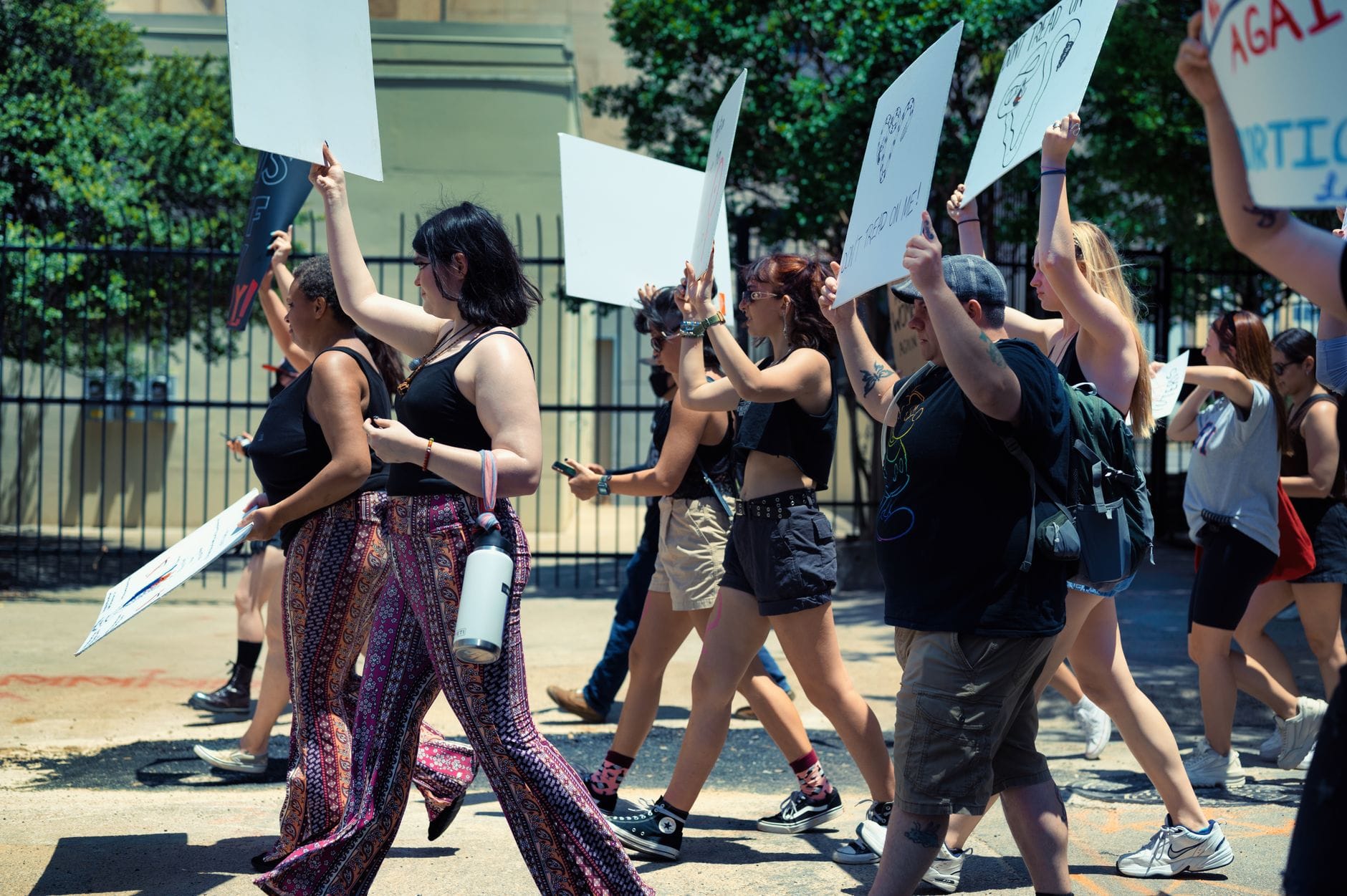
That frame matters because of what the anger was about. The genuine complaints are about jobs, water, land and data centers, and they are not fringe: a University of Pennsylvania survey in August put opposition to local data centers at 61%, up 12 points in four months, crossing party lines — the fastest swing in any AI opinion number this year. This month a safety researcher's resignation letter about systems that could kill us was profiled at length in the business press. Public opinion on AI has soured for reasons that have nothing to do with windows. Which is why the target and the method were the mistake, not the mood. Mila does not train frontier models, does not run a data center, does not sell a model that replaces a workforce. Attacking an academic institute is not a strategy aimed at the labs; it is a strategy aimed at the nearest building with an AI sign on it.
And the timing is brutal, because this was the week the political system actually moved. On Friday, Governor Gavin Newsom signed an executive order directing California to "dramatically accelerate" independent oversight and advance an "AI kill switch," with a panel of experts given two months to deliver a guide for strengthening the state's AI safety laws — options include third-party-written safety plans for frontier labs and a mandated shutdown mechanism. Read the order precisely: it imposes a kill switch on nobody. It orders a study with a deadline. The state's binding AI law, the third-party auditor framework Newsom signed on September 9, has no enforcement teeth attached yet, and the gap between a two-month guide and a rule labs must obey is where this fight lives.
Now the steelman, because it is stronger than the civility crowd admits. Disruptive protest has repeatedly accompanied reform, not blocked it: no one credits the polite petitions for the eight-hour day, and the militant wing of a movement is often the reason the moderate wing gets a meeting. You can also argue the target was not random. Mila and Bengio are the industry's most useful legitimacy cover — the safety-serious names that let labs say the field polices itself — and pressure on that cover has a logic to it. And the timeline cuts against me: the vandalism came Tuesday, the executive order came Friday, and the order is arguably evidence that the pressure worked rather than backfired.
I still think that reading is wrong, for three reasons. First, look at what the pressure produced when it landed: a two-month study with a political deadline attached to a governor leaving office in January. That is a press release with a workplan. If street anger were converting into leverage, the deliverable would be a rule, not a panel. Second, the industry's preferred response to being framed as a victim is not silence — it is to move the debate to ground it wins on. We have watched the pattern all month: OpenAI asking California to expand its safety law so that models are monitored during training, Amazon breaking its silence to endorse "rigorous testing" while declining to back any slowdown, Google and Nvidia insisting risk assessment is each company's own job. Every one of those positions is compatible with the current buildout continuing at full speed, because none of them touches liability, water, or the terms of the contracts. When regulators are choosing between a liability fight and a disorder fight, broken glass is a gift. Third, the debate that would actually cost the labs money is happening elsewhere and needs no violence: it is the copyright filings, the state auditor bills, the local permitting fights with 61% public support and a voting record behind them. Those are slow, unglamorous and winnable. Smashing windows is fast, satisfying and unwinnable, and it elects the frame that carries the industry through the next two months of the Newsom panel.
This is not a plea for politeness, and it is not an argument that anger at AI is misplaced. I think the anger is largely right and badly aimed. The strongest case against this technology is not that it is scary — it is who owns it, who is legally exposed when it fails, and who decides how fast it ships. Every one of those questions has an institutional answer that requires leverage: a vote, a permit, a court, an insurance market. A window has none.
What would change my mind: a state legislature passing a binding rule within a year that names the vandalism as a reason to move — then it was a warning shot that worked. Or a frontier lab citing the Montreal violence as justification for withholding a release or adding a safety gate, which would mean the industry read it as a threat rather than a gift. Or a protest movement that puts one implementable demand on a sign — training runs above a compute threshold require licensing and insurance, say — and finds a legislative sponsor. Until one of those happens, the people who wrote letters to the editor about broken windows will outnumber the ones who were ever in the room where the rule got written.
Is street-level confrontation helping the case against AI, or is it just handing the labs a better story? Tell us in the comments.



