
Deep Dive — Waymo's custom chip brings Gemini into the car

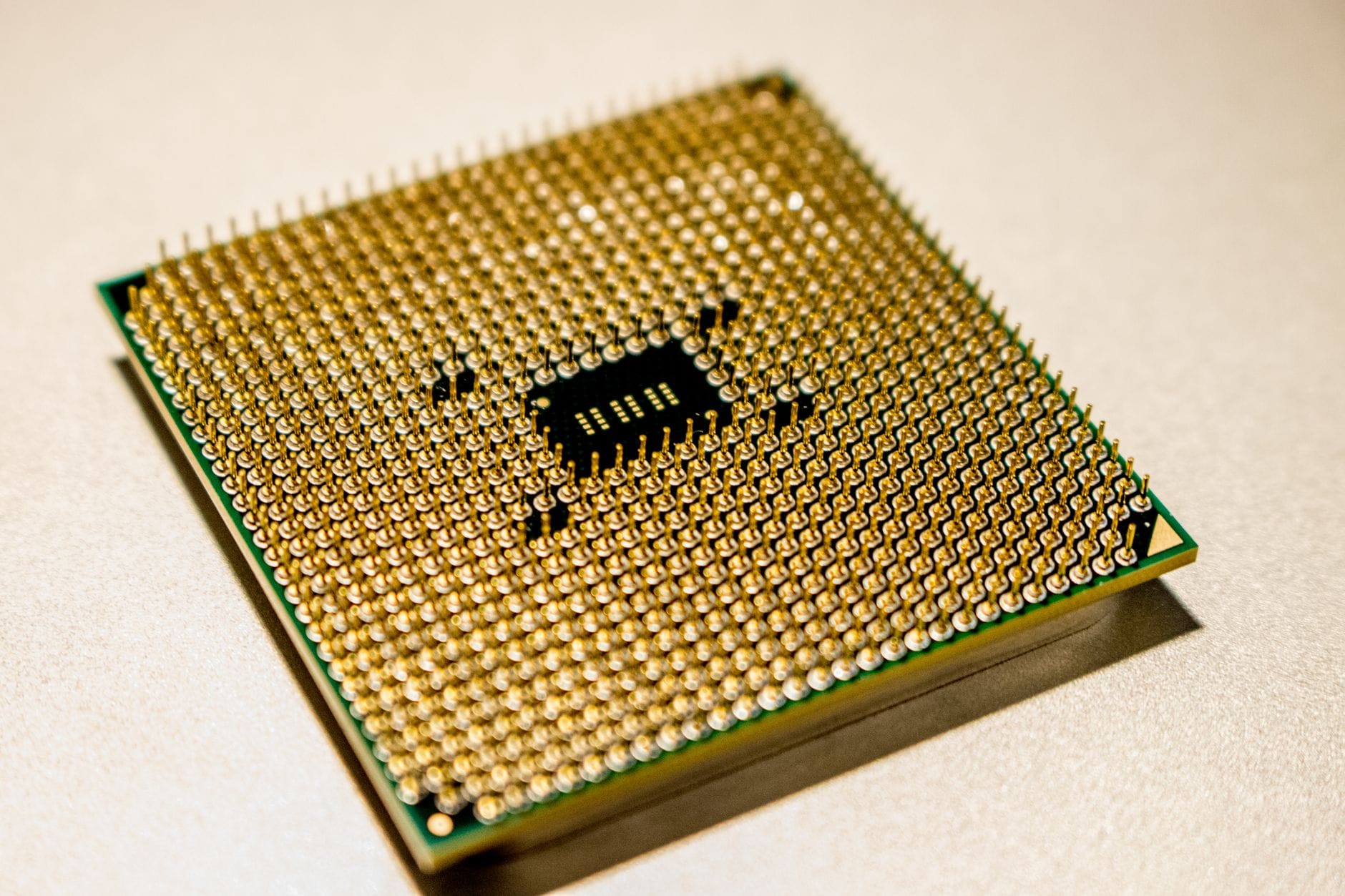
Waymo has reportedly designed its own automotive AI chip, a purpose-built piece of silicon that pushes past 1,000 trillion operations per second (TOPS) and is built on TSMC's 5-nanometer process. The headline detail: Google's Gemini large model is deeply integrated into it, and the part is said to be headed for mass production in vehicles. If the report holds up, it is the clearest signal yet that the autonomy race is becoming a silicon race.
The account comes from a Chinese electronics trade outlet (电子工程专辑 / EEWorld) and has not been independently confirmed by Waymo; treat the figures as reported, not announced. But even as a single-source report, the direction is consistent with where the whole industry is moving — and it tells us something about how Waymo intends to scale.
Why a self-designed chip, and why now
Running a robotaxi is one of the most demanding inference jobs in all of computing. A car has to fuse lidar, radar, cameras, and ultrasonic sensors, build a real-time model of everything around it, plan a path, and act — continuously, with latency low enough that "thinking" never lags reality. That workload is power-constrained (it runs off a car's battery), thermally constrained (it sits in a sealed box in a hot cabin), and safety-constrained (it cannot lock up or silently degrade).
Off-the-shelf automotive system-on-chips, like NVIDIA's DRIVE Orin or Thor, are capable and have powered many robotaxi and advanced-driver-assistance programs. But they are general-purpose parts designed for a wide range of carmakers and use cases. A company operating its own bespoke autonomy stack — Waymo's end-to-end neural nets, its simulation pipeline, its Sensor Suite — can wring out more performance per watt by designing silicon around its exact software rather than buying a part built for everyone.
The reported 1,000-plus TOPS figure matters less as a bragging number than as a symptom. TOPS is a crude, easily gamed benchmark (it measures peak math throughput, not real driving performance), but a part in that class is what you need if you want to run a large multimodal model — something Gemini-sized — at the edge, in the car, in real time. The interesting claim is not "1,000 TOPS." It is "Gemini is deeply integrated into the chip." That suggests Waymo is not just bolting a big model onto existing hardware; it is shaping the silicon to the model.
The model-in-the-loop shift
For years, robotaxi stacks were a pipeline: detect objects, track them, predict their motion, plan, then act. Increasingly, the field is collapsing that pipeline into large neural networks that take raw sensor data in and emit driving commands out — what the research community calls end-to-end driving. Our look at Tesla putting ByteDance's Doubao AI inside its cars showed how quickly consumer and cabin AI is moving into vehicles, but autonomy is the harder layer: a chatbot can stall, a car cannot.
Running a frontier-class model in a moving vehicle is exactly the problem the edge-AI research community has been grappling with. A recent survey, "Large Models for Small Devices: Recent Advances and Empirical Analysis of Edge AI Deployment," deploys compact language and vision models on GPU, CPU, and even Raspberry Pi hardware, and its authors' blunt finding is that what compresses well does not necessarily deploy well — no single compression technique wins across tasks, and real hardware behavior has to be measured, not assumed. That is the wall Waymo's custom chip is built to climb: getting a Gemini-scale model to behave on automotive silicon, under a power and thermal budget, without a datacenter behind it.
This is also where the 5-nanometer process node earns its place in the story. Smaller process nodes pack more transistors into the same area and generally improve performance-per-watt — critical when the chip must sip from a vehicle's electrical system while sealed inside a thermal envelope. TSMC's 5nm is a mature, high-yield node for automotive-adjacent parts, which fits a part meant for mass production rather than a one-off prototype.
What it means for the robotaxi economics
Waymo's stated advantage has always been scale and safety margin, not cheap hardware. As we noted when Waymo opened its Ojai robotaxi service to all riders in LA, Phoenix, and San Francisco, the company runs a bespoke, sensor-laden vehicle expanded city by city under individual permits. And as Waymo's fleet hit 4,000 vehicles, we saw that scale brings its own headaches — parking fines, regulator scrutiny, edge-case incidents.
A custom chip attacks the cost side of that equation. Today each Waymo vehicle carries expensive, redundant compute. Designing your own silicon, built in volume on a leading node, is the path to bringing that cost down per car while raising the intelligence per watt. It is also a supply-chain posture: depending on a single merchant silicon vendor means your roadmap is hostage to their cadence and allocation. Owning the chip design lets Waymo pace hardware to its software, the way Tesla has long argued for vertical integration.
There is a strategic contrast worth drawing. Tesla's bet is a vision-only stack on consumer-grade hardware it manufactures at scale, and it is iterating toward driverless operation in Austin as we covered in Tesla's Austin robotaxis going driverless. Waymo's bet has been the opposite — more sensors, more compute, slower city-by-city rollout. A custom, Gemini-powered chip is Waymo's answer to the cost critique of that approach: keep the sensor richness, but stop paying merchant-silicon margins for the brains.
The skeptic's case
Several caveats should temper the excitement. First, the reporting is a single trade-publication account; Waymo has not confirmed the chip, its specs, or a production timeline. Automotive silicon has a brutal qualification cycle — parts must survive years of reliability testing, temperature extremes, and supplier audits before they sit in a passenger car. "Headed for mass production" and "in volume in next year's cars" are very different states.
Second, TOPS is a vanity metric. Vendors have learned to quote peak throughput that real workloads rarely sustain. What matters is sustained performance on Waymo's actual networks, the memory bandwidth feeding the chip, and the software stack mapping Gemini onto it — none of which the report quantifies. A giant model that does not fit in on-chip memory, or that starves on bandwidth, delivers far less than its TOPS suggest.
Third, there is the integration risk. "Deeply integrating Gemini" could mean anything from a distilled, pruned version of the model running a specific driving subsystem, to a full multimodal model handling perception and planning. The report does not say, and conflating the two would be a mistake. The hard engineering is not running Gemini somewhere in the car; it is running the right slice of it, safely, within the car's power and latency budget, with a fallback the regulator will accept.
What to watch next
Three things will tell us whether this report becomes a real inflection. One: an official Waymo or Alphabet acknowledgment, or a supplier leak (TSMC, or a packaging partner) that corroborates the part and its node. Two: a production timeline tied to a specific vehicle generation — "mass production" without a date is a press nuance, not a commitment. Three: independent benchmark or teardown evidence of what the chip actually runs, because that is the only way to separate a 1,000-TOPS marketing figure from real driving capability.
If the chip is real and ships at volume, the implication ripples outward: the autonomy leaders stop being merely software or fleet companies and become silicon companies, competing on the same vertical-integration logic that defines Apple and Tesla. That raises the barrier to entry for anyone without a fab strategy or a deep merchant-silicon partnership — and it turns "whose model is smarter" into "whose model runs efficiently in the car."
Does owning the chip change who wins the robotaxi race, or just who pays for it? Tell us in the comments.



